
Join us for an immersive and unforgettable field school.
Northern Great Basin Collaborative Archaeology Field School is co-directed by the University of Oregon Museum, Warm Springs GeoVisions, and the University of Nevada, Reno.
This program offers hands-on, culturally grounded training in archaeological field methods, emphasizing collaboration, respect, and stewardship of cultural heritage in central Oregon.
Applications are now closed for summer 2026.
COURSE
ANTM 408 / 508: ARCHAEOLOGY FIELD METHODS
June 22 through July 17, 2026
This summer, we are launching a new archaeological field school developed through collaboration among the University of Oregon, GeoVisions, the Confederated Tribes of Warm Springs Tribal Historic Preservation Office, and the University of Nevada, Reno. Founded on a shared commitment to cultural heritage preservation and education, the program integrates archaeological and Indigenous knowledge systems to provide holistic, culturally grounded training. Emphasis is placed on ethical practice, community engagement, and collaborative research.
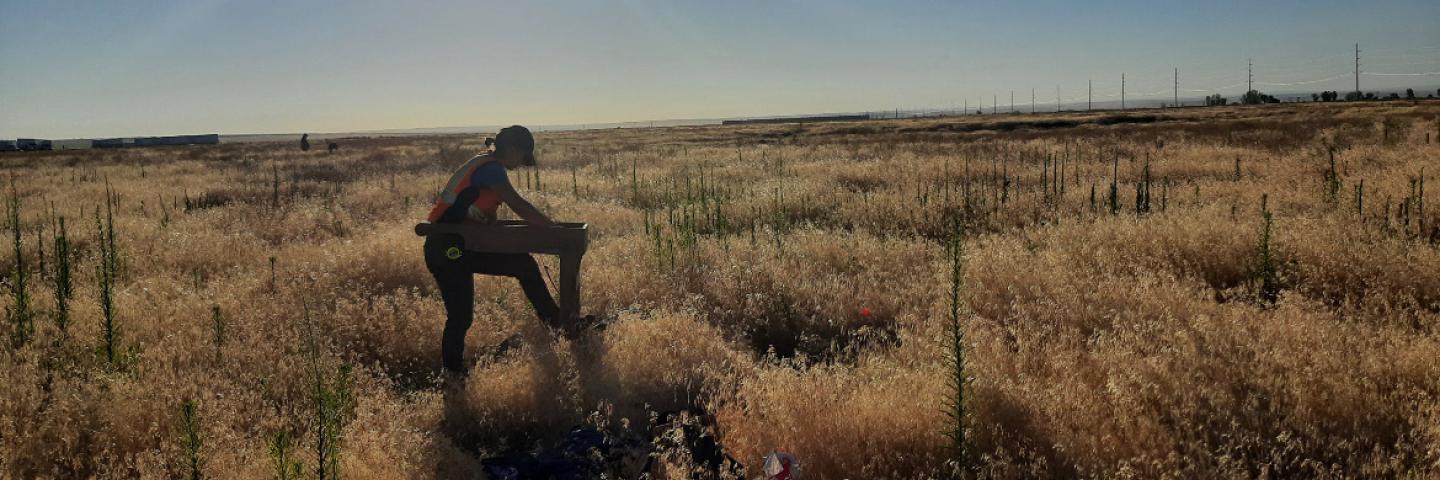
Students will gain hands-on experience with archaeological research and field methods while learning directly from professional archaeologists and Tribal practitioners. Training will include pedestrian survey, site recording, excavation techniques, lithic analysis, geoarchaeology, paleoethnobotany, oral history, GIS and total station operation, map and compass work, and cataloging, among other skills. These experiences will prepare students for careers in archaeology, cultural resource management, Tribal heritage preservation, environmental science, and related fields.
Research conducted during the field school will focus on ancient shorelines of the pluvial lake that once filled the Fort Rock Basin during the Ice Age. Students will revisit and document known archaeological sites across different elevations and conduct pedestrian surveys and site testing to identify previously unrecorded sites. This work will explore enduring relationships between people and landscapes over millennia.
12 credits
INFORMATION
This course is designed to provide students with a “hands-on” introduction to archaeological fieldwork and collaborative methods through participation in research projects, workshops, lectures, and professional development activities. Upon successful completion of the course, students will be able to:
- Apply principles of collaboration and consultation by recognizing Tribal protocols, roles, and responsibilities, and engaging respectfully with Tribal partners and other stakeholders.
- Demonstrate professional conduct and ethical practice through effective teamwork, adherence to archaeological and Tribal protocols, and preparation for employment in archaeology.
- Conduct pedestrian survey using GPS navigation, transecting, and systematic survey strategies.
- Understand and apply survey strategies and differentiating survey sampling methods.
- Define non-invasive methods and provide common examples.
- Record and evaluate archaeological sites by completing and updating site forms, writing detailed site descriptions, and assessing National Register of Historic Places eligibility and integrity.
- Carry out controlled archaeological excavation by establishing units, using trowel and shovel techniques, operating a total station, screening, cataloging, and maintaining field documentation.
- Analyze geoarchaeological contexts by identifying landforms and geomorphic processes and describing and profiling sediments.
- Identify and analyze lithic materials including stone tools and debitage, with familiarity in Great Basin projectile point typologies and basic knapping techniques.
- Identify floral and fauna on the living landscape and in archaeological contexts.
Field sessions are open to graduate and undergraduate students. Post-baccalaureate students may register for graduate credit even if they are not yet enrolled in a graduate program.
2026 Course Fees: $4000
Archaeology Field School students will enroll for 12 credits in ANTM 408/508. A course fee of $4000, for both in-state and out-of-state students, covers tuition, field transportation, and food. Students that have completed their bachelor's degree may take this course for graduate credit, with the expectation that graduate level effort will be required. Most tools and other materials are provided for the course.
Please send questions to Katelyn McDonough at kmcdonou@uoregon.edu.
Health and accidental insurance are required for all students.
Below are the basics. Instructors will send accepted students a detailed list of required and recommended personal gear. Weather conditions in the high desert can change rapidly—expect hot, dry days, but be prepared for cold nights and mornings, wind, and occasional rain.
- Camping gear (tent, sleeping bag, sleeping pad or cot, etc.)
- Backpack (daypack suitable for carrying water, tools, and personal gear)
- Wide-brim hat
- Sunscreen
- Water bottles or hydration system (capacity of at least 2 liters required)
- Sunglasses
- Durable footwear (suitable for uneven terrain and long distances)
- Work gloves
- Outdoor clothing (breathable, sun-protective, and layered for variable conditions)
- Sun shower bag
The Museum of Natural and Cultural History is delighted to offer the C. Melvin Aikens Scholarship for the 2026 field school to contribute to students' tuition to attend. Selection of this award will be on a needs-based evaluation. If you would like to be considered for this award, please provide a statement of need that explains how receiving the C. Melvin Aikens Scholarship will affect your ability to attend. Apply via the field school application.
Additionally, full scholarships and stipends are available for Tribal members through GeoVisions. Please indicate your interest in this opportunity on the application form.
The application for field school includes some specific questions that we recommend preparing in advance of filling out the application. Questions include:
1. Interest in Archaeology and Cultural Heritage Preservation (100–300 words)
- Please describe your interest in archaeology and what has led you to apply to this field school. You may discuss any academic, professional, or personal experiences that have shaped this interest. Prior archaeology or field experience is not required. Relevant preparation can include coursework, research, volunteer work, outdoor experience, or interests in related fields such as geology, history, Native American and Indigenous Studies, ecology, or others.
2. Interest in the Great Basin and Central Oregon (100–300 words)
- Please describe any experience you have in the Great Basin, central Oregon, or similar environments or cultural regions. This might include coursework, fieldwork, outdoor or recreational experience, residence, or independent learning. If you have not spent time in this area, please share what interests you about learning more about these landscapes and their histories.
3. Participating in a Collaborative Field School (100–300 words)
- This field school emphasizes collaboration and Tribal-guided research. Please share your interest in learning within this type of program. You may discuss any experience you have with Tribal communities or collaborative approaches in archaeology or anthropology. If these ideas are new to you, reflect on what you hope to learn and how you see yourself growing as a respectful student researcher.
Applications for summer 2026 are now closed.
Questions? Email Katelyn McDonough at kmcdonou@uoregon.edu.
2026 field school plans and safety protocols are subject to change based on guidance from the University of Oregon and the Oregon Health Authority.
QUALIFICATIONS AND EXPECTATIONS
Physical Demands
Participants must be prepared for sustained outdoor work in central Oregon summer conditions. Students should arrive ready to participate fully and safely in daily field activities. Fieldwork may include:
- Hiking 1–4 miles per day over uneven terrain
- Carrying a backpack with water and field equipment
- Excavating, screening, and recording archaeological materials
Digging, lifting, and repetitive physical tasks
Professionalism, Attitude, and Community
Field school is both an academic course and a shared living/working environment. Students and instructors work closely together, sometimes in challenging conditions. A positive, respectful, and collaborative attitude is essential. Students are expected to:
- Work cooperatively and contribute to a supportive team environment
- Approach challenges with flexibility, patience, and a willingness to learn
- Respect fellow students, instructors, landowners, and community members
- Participate fully in both fieldwork and camp responsibilities
All participants are expected to follow the University’s Student Conduct Code
Working Collaboratively
This work takes place within living Indigenous landscapes. The Fort Rock Basin is within the homelands of the Klamath, Northern Paiute, and Modoc peoples. Many of their descendants today are citizens of the Klamath Tribes, Burns Paiute Tribe, Confederated Tribes of Warm Springs, and Fort Bidwell Indian Community. This program is directed collaboratively with the Confederated Tribes of Warm Springs, with speakers and guests from other Tribal communities. Participation in this field school requires a commitment to:
- Approaching archaeological work with care and respect
- Recognizing the ongoing cultural significance of the places we study
- Engaging thoughtfully with Tribal perspectives and stewardship priorities
Understanding archaeology as a practice that carries ethical responsibilities
Instructors
Primary full-time instructors include Katelyn McDonough (University of Oregon), Richie Rosencrance (University of Nevada, Reno), Geoffrey Smith (University of Nevada, Reno), and Chester Liwosz (GeoVisions). Primary collaborators include Larry Squiemphen III (Tribal Historic Preservation Officer, Confederated Tribes of Warm Springs), Brandon Gilliland (GeoVisions), and David Witt (GeoVisions). Dan Stueber will teach a two-day lithic analysis and knapping workshop. Students will also learn from guest speakers including Tribal Elders, Traditional Practitioners, land managers, and other specialists throughout the summer.
Logistics
We will camp together on private property in Fort Rock Valley, Oregon, located ~15-minute drive from Fort Rock State Park. It's a beautiful, shaded, and fenced-in space. We will be camping in tents, with portapotties for restrooms, and delicious potable well water for drinking and cooking. There are structures where you can hang your sun shower bag for showering. We do have some access to electrical power at camp but most of it will be directed toward the kitchen and field equipment. We can take turns charging our personal devices, but we recommend bringing your own battery or solar powered charger if you want to charge items regularly. There is no WIFI and poor cell phone service at camp, but most people can get cell service from a nearby hill.
We will conduct fieldwork during a four-week-long session (with weekends off). The class will typically meet at 7:00 AM Monday-Friday and work will continue through 4:00 PM. Keep in mind that the course schedule is somewhat tentative and will depend on weather conditions and general field progress. Beyond fieldwork hours, students will have responsibilities to participate in weekly evening lectures and contribute to camp duties. Students are welcome to stay at the camp during weekends and to bring personal vehicles if desired. The UO van will travel to Eugene Friday afternoon and back to camp Sunday evening.